
This Pork Belly Recipe Tastes Like a Filipino Street Food
Filipino Pork Belly. Just those 3 words should make your mouth water!
Things to know:
What is pork belly called in America?
In America, pork belly is most famously known as bacon, specifically “streaky bacon,” which is the cured and smoked cut from the belly; however, the raw, uncured slab itself is also sold as pork belly for braising, roasting, or deep-frying, and can be made into salt pork for stews, with “American bacon” often meaning cured pork belly internationally.
Why is pork belly so expensive?
Pork belly is expensive due to high demand (especially for bacon), tight supply from low inventories, high processing/labor costs for restaurants, increased feed/transportation costs for farmers, and its use in popular international cuisines, all combining to create a high-value, inelastic product where consumers are less price-sensitive.
Is banana ketchup available in the USA?
Yes, banana ketchup is available in the USA, but its availability for popular imported brands like Jufran and UFC faced temporary shortages and import issues in late 2024 due to FDA alerts about certain food additives, though new US-made alternatives (like Fila Manila) and restocking of original brands (like Jufran on Weee!) have since emerged, found in Asian markets or online.
What does banana ketchup taste like?
Banana ketchup tastes like a sweeter, tangier, and fruitier version of regular tomato ketchup, with a flavor profile often compared to sweet and sour sauce, but it generally does not taste strongly of ripe bananas, instead offering a milder, sometimes slightly savory fruitiness from green bananas and spices. It’s sweet and tangy, with a texture similar to tomato ketchup, but less acidic and more complex.
Why do Filipinos use banana ketchup?
Filipinos use banana ketchup because it was invented during World War II as a substitute for expensive, scarce tomatoes, using abundant local bananas, sugar, vinegar, and spices, becoming a sweet, tangy staple used on everything from hot dogs to spaghetti, and eventually dyed red to mimic tomato ketchup. Food scientist Maria Orosa is credited with developing the recipe, creating a resourceful, culturally significant condiment that highlights Filipino culinary ingenuity.
Ingredients
3-4 pounds skin off pork belly, cut into 1” thick strips
Marinade
3/4 cup soy sauce
1/2 cup lemon juice
3/4 cup banana ketchup
1/4 cup brown sugar
2 T garlic powder
1 t ground black pepper
2 t salt
1 1/2 cups 7 up
Basting sauce
1/3 cup soy sauce
1/4 cup lemon juice
1/3 cup banana ketchup
2 T brown sugar
1 T garlic powder
1/2 t ground black pepper
1 t salt
1. The night before: Prepare the marinade by combining ingredients above in a bowl to make the marinade. Add the sliced pork belly with the marinade in a gallon sized freezer Ziplock bag. Chuck the pig in the refrigerate overnight, or at least 8 hours.
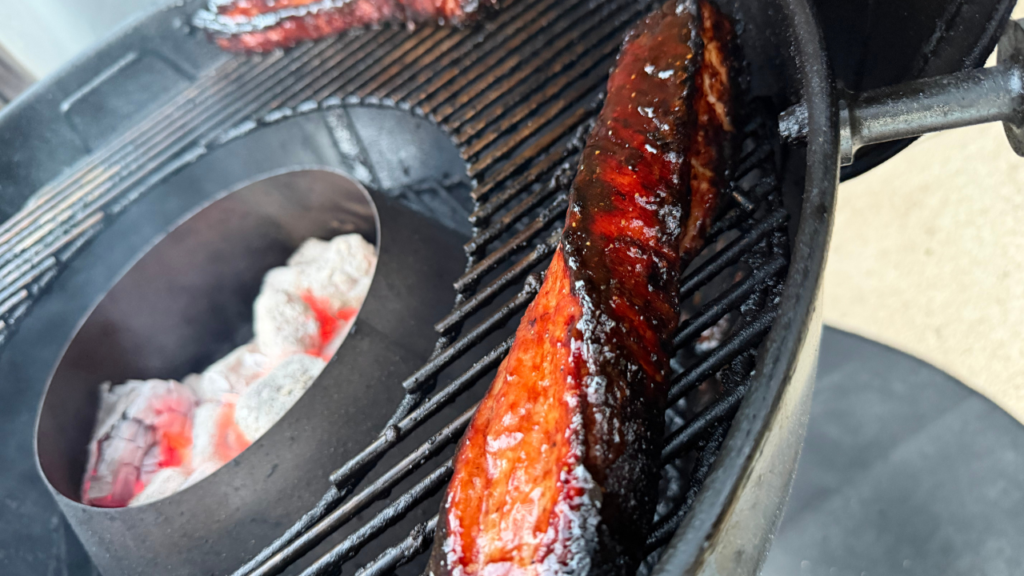
2. Set up your grill by preparing a chimney of charcoal. After 15 minutes of burning, place them in a Vortex holder positioned in the middle of your grill, then add the grate.
4. Fully open the bottom and top vents and allow the grill to heat up for 10 minutes. Spray your grates with cooking spray. For more smoke flavor, add a chunk of cherry or apple wood to the coals.
5. Place the pork around the perimeter of the grill. Cook for 50-60 minutes, ensuring you rotate the lid 1/3 turn every 10 minutes to prevent hot spots.
6. While the pork belly cooks, make your basting sauce. Combine the ingredients above and stir to mix.
7. For the last 30 minutes of the cook, baste the pork belly every 10 minutes.
8. Remove the pork belly from the grill, slice it, plate up and serve. ENJOY!
Equipment used:
Valhalla Series Bull-Nose Butcher Knife 10”
DISCLOSURE: When we link to products and services, those links may be customized affiliate links. If you click on any of those affiliate links and make a purchase within a certain time frame, We’ll earn a small commission. The commission is paid by the retailers.
Here’s an example: If we link to our favorite vegetable peeler, and you click on that link and complete a purchase within the next 24 hours, we may receive a commission somewhere between 1 to 10 percent of your total order.
We are careful to link to products and retailers that we use ourselves and recommend. These affiliate programs use cookies to track visits for the purposes of assigning commission on these sales. Money earned keeps Galley of the Sun running and allows us to do what we love.
Thank you for your support.
SELECT AFFILIATE PROGRAM DETAILS: We are currently members of affiliate programs with Amazon and Dalstrong. We are eligible to earn from qualifying purchases.